
“Be able to laugh at yourself, laugh at everything around you. Don’t take yourself too seriously. Even when you need to have a good cry and good laugh at the same time, laughter is key.”
Mary K. Hoodhood

Roach family photo

Mary K. as a child

Mary K. and her Mom at the cottage.
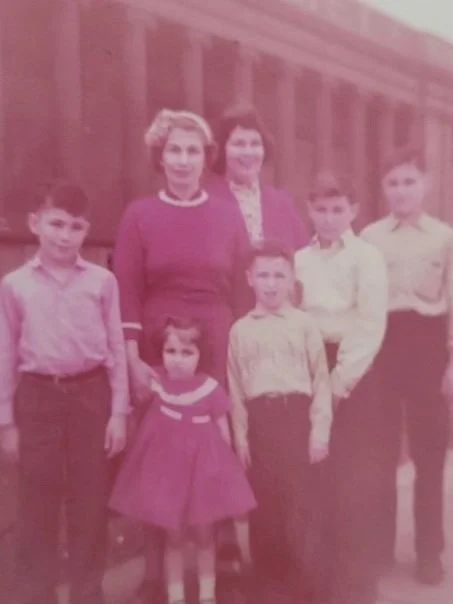
Mary K., her Mom, and her siblings on family vacation in Washington D.C., 1955.

The Roach Family 1953, Mary K. is on her Mom's lap

Mary K. at the cottage.

Mary K. loved summer days at the cottage.

Mary K., her Mom, and her brother Terry whiling away summer days.

Mary K.'s favorite picture of her Mom, Marion. Love the hole in the wall.... they did fix it at some point!

Mary K. at Kids' Food Basket's old location.

Mary K. in her yard with her old dog Lily

Mary K. with the Presidential Citizens Medal

Mary K. receiving the Presidential Citizens Medal

Mary K. The L'Oreal Women of Worth Awards

At the Women of Worth Awards; Hoda Kotb introduced Mary K.

Stephanie, Hoda, Jeff, and Mary K.

Hoda, Mary K., and Mel

Mary K. and Hoda

Mel, Andie MacDowell, and Mary K.

Mel, Mary K., Stephanie March, and Jeff

Mary K. and Andie MacDowell

Mel, Jeff, MK, Stephanie

MK, Mel, and JJ in Florida in 2016

Mary K., and the freeloader JJ catching a ride

Mary K. and Jeff 1980

Mary K., Doreen Dill, and Louise Kempker

Mary K. and Armen Oumedian

Ryan Anderson, MaryAnn Prisichenko, Jeff, Mel, and Mary K.

Jeff, Mary K., George Heartwell, and Bernard Taylor

Armen, Terry and Pam Roach, and Mary K.

Mary K.'s award from the Daughter's of the American Revolution

MK. Jeff, and Armen

MK and Jeff getting ready to deliver a food drive to KFB

Governor Granholm, Kyle, Bridget Clark Whitney, Jeff, Megan, Ryan Anderson, with Mary K.

MK at new KFB warehouse with Deb Anderson, Melissa Shea, Tim O'Brien, and Gregg Robinson

Jeff and Mary K. at a KFB fundraiser

MK at KFB

Mary K. at Sibley School watching the kids painting tote bags to auction

MK and MaryAnn Prisichenko

MK, Mel, and Jeff in Las Vegas 2006

Steph, Mel, Jeff, and Mary K. at Lowery's Prime Rib in Las Vegas

Mary K. and Stephanie at the White House

Mary K. when she won the Classic Woman Award 2015

Mary K., Bridget, and a Sibley Student

MK and Jeff

Mary K. thanking volunteers at KFB
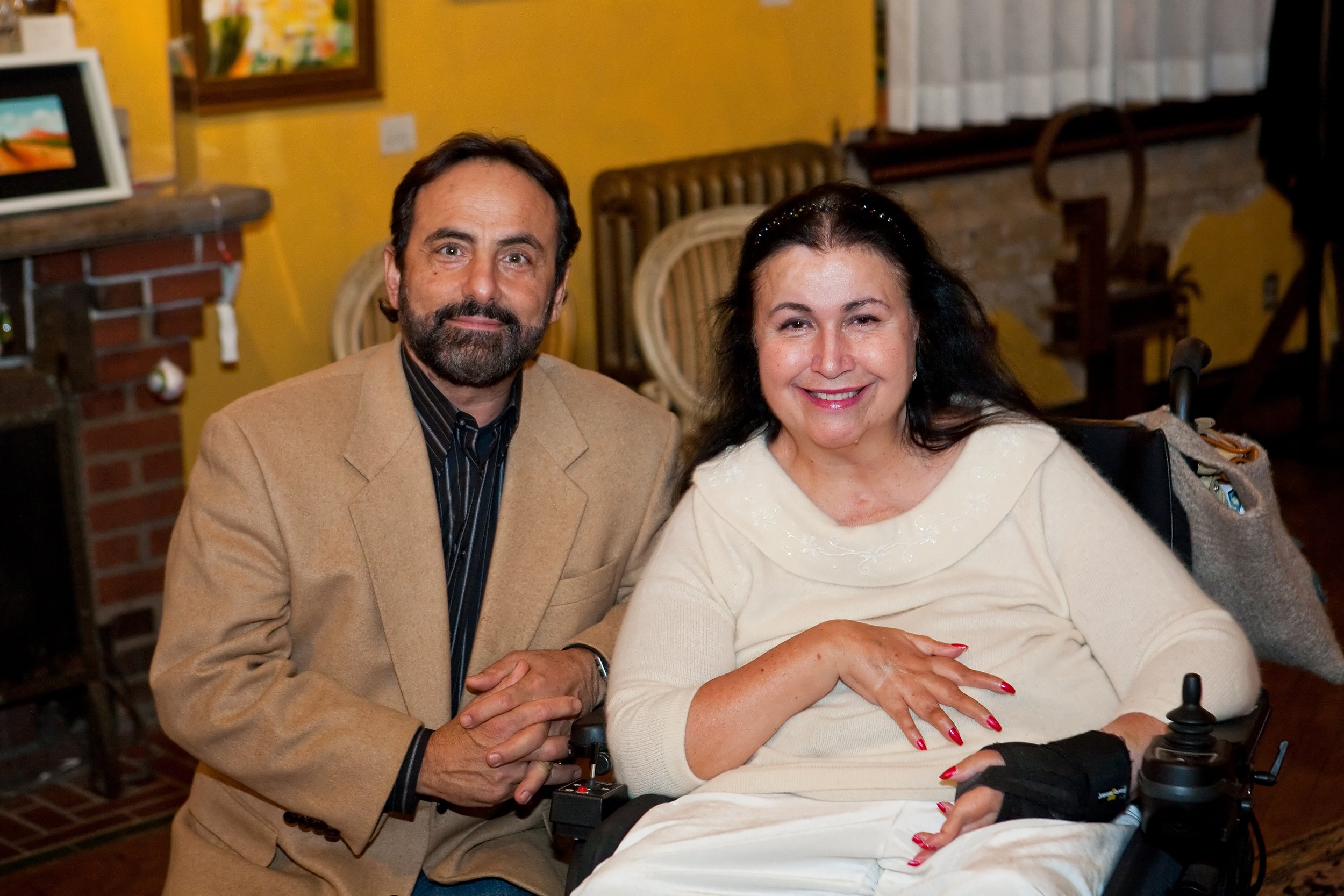
Jeff and MK

Mary K. at the White House

Carol Greenburg, Stephanie, Bridget, Mary K., and Brad Littell at the White House

Mary K. at the Lincoln Memorial

Mary K. and her friends at the White House
EXCERPT FROM CHAPTER ONE
Peace Comes from Within
I have to stop this cascade of memories, or at least take them out of their drawer only for a moment, have a brief look, and put them back. I know how to do it now: I have to take the key to acting and apply it to my life. There is no other way to survive except to be in the moment. Just as my accident and its aftermath caused me to redefine what a hero is, I’ve had to take a hard look at what it means to live as fully as possible in the present.
―Christopher Reeve
I woke up and it felt like I had entered a void. I could hear the beeping of machines around me and the sound of hushed voices. I realized that I was moving, that I was lying in a bed that was turning back and forth, right 90 degrees, flat, then left 90 degrees in slow motion, but it was still dizzying. There were people in the room with me, and I could turn my head from side to side to see them, though they were just blurred outlines at first. I wanted to call out, but my mouth was blocked with tubes. The world seemed hazy and confusing, and I couldn’t figure out where I was or what was happening.
Pieces of time came back to me in little flashes. I remembered Jeff packing up the Volkswagen Beetle with his tools, our tent, and other supplies. I remembered the drive to Silver Lake Sand Dunes where we were going camping. Jeff called us “The Three Amigos,” me, him, and his six-year-old daughter, Melisa. We were excited and happy to be taking this trip together, and even though Jeff and I had only known each other for just over a year, there was no doubt in my mind that we were a family. We set off on the long car ride with Mel sleeping on my lap, Jeff driving. I dozed off a little myself, and then woke when Jeff said, “Look, we’re almost there. You can see the dunes.” I turned my head to look. A flash of color, a loud crash. The car swerved.
Then there was nothing.
No time, no place, no memory. It was like staring into a black screen after the movie has ended. There were little murmurs of static, just the tiniest wisps of memory, but they were absorbed by the blackness.
The feeling in my body was like a throbbing numbness, like when your foot falls asleep and you can’t shake it to get the blood flowing again. The sensation was difficult to pinpoint, as though the numbness was the physical version of constantly hearing a buzzing sound, a persistent annoyance that was not exactly pain but felt relentless.
The room was disorienting as I slipped slowly from viewing one side to another. I was on a ventilator, and would be for ten days, and the whoosh of air going in and out of my lungs formed a steady rhythm, accompanied by the beeping of machines I couldn’t identify. Finally, my mother’s face appeared, a look that reflected joy and fear and hope as she called out to the nurse, “She’s awake, she’s awake!”
The quiet comfort of knowing my mother had been at my bedside calmed me a little in these inexplicable circumstances. I didn’t know what was happening to me, but I knew my mother could handle anything, would handle anything, and therefore, so could I. Another flip, and I realized Jeff wasn’t there. A new fear for Jeff and Mel overtook anything I was feeling for myself. I knew without doubt that Jeff would be with me if he could. If he wasn’t here, there was a reason. I couldn’t speak because of the ventilator, but I think my mom must have known what I needed to hear.
“He’s alive. He’s still at Hackley Hospital in Muskegon. You were airlifted to Grand Rapids Blodgett.” She didn’t tell me anything else. I clung to the thought that as soon as he could, Jeff would be with me. I knew he would not give up on me.
The nurse checked on the machines that were keeping me alive, and I felt so much gratitude for her, for the machines, for the little bit of blue sky I could see through my window. I was still groggy, and it felt like some weird dream was happening that I couldn’t quite grasp.
Then the doctor came and stopped my bed from rotating while he was talking, which was a relief. He explained what had happened and what they had done to save me. We had been in a car accident, and I had been crushed inside the car after it rolled several times. The doctor said I had suffered a spinal cord injury at my C4-C5 vertebrae. I had needed surgery to save my life. He said I had been in a coma for two days. Two days? Two days. The loss of those two days hit me, but it was nothing like the loss unfolding before me.
I would be paralyzed for the rest of my life.
I heard the words he was saying, but it was almost as if they didn’t have meaning. I couldn’t grasp the situation, couldn’t believe this was happening to me, couldn’t fully understand what it meant. My first thought was that this couldn’t be real—there was no way this could be my life. That sense of the surreal made me feel almost disassociated from myself. There was the me who was the person I had always been, and there was the me who was the person in this bed. I kept thinking that there had to be some way to get back to that old me, the real me, to the real life I was supposed to live. If it just required a force of will, I knew I had that. If it was a matter of going back and undoing that one moment, I would figure out a way to do that.
Somewhere deep down I knew none of that was possible, but I wasn’t ready to face it yet. I think I was in shock. I would try to grasp the reality of the situation, but either my own mind or the drugs I was being given would take over, and it couldn’t quite sink in. Eventually, the details wormed their way into my brain, but it would take a long time for them to settle in. I didn’t know it in those first days, but ahead of me lay months of managing changing emotions and years of learning how to direct my mind toward the positive side of things, no matter what.
I could see my mother crying behind the doctor, but I kept telling myself, “At least I’m alive.” I firmly believed that where there is life, there is hope, and I wasn’t ready to give up hope yet. That would have meant giving up not only on myself, but on the value of life itself. Like trying on a new dress to see how it fits, I tried on this new version of my life by repeating to myself what the doctor had said. I would be paralyzed with feeling from my chest up, but nothing below that. I had the ability to move my head and my shoulders. When I got out of the hospital bed, it would be to sit in a wheelchair. It still wouldn’t quite register that this was really happening, that this would be my life.
The doctor turned the bed back on and I resumed my rotation from side to side. The movement was slow, almost meditative. I knew I was moving because I could see my view of the room change from side to side. In my chest, head, and shoulders, I still had feeling, so as my weight shifted, I could feel the pull of gravity first one way then the other, even though I was strapped into the bed. It was like some strange scene from a horror movie, but it was me, my life. I thought about what the doctor said, and I knew it must be true, but it still wasn’t registering. I couldn’t put together the words he said and see how they applied to me. My brain was still trying to work it out.
I had so many questions. Was there a chance I could get better? What would my life be like after this? Would I be able to do anything for myself? If I couldn’t walk again, what would I do? Where would I live? How would I live? Why was this happening to me? I couldn’t talk so these questions were unvoiced. I was locked inside a body that wouldn’t move and a mouth that couldn’t speak.
If they gave me the answers, I couldn’t remember. I just tried to be calm and waited for Jeff. For the next couple days, my mother watched over me with my sister and brothers taking shifts with her. My family—Mom, Joanne, Tom, Dave, Mike, and Terry—had decided that I would never be left alone and set up a 24-hour rotation. They watched over me, a belated form of protection, which was wonderfully comforting. I knew that even if Jeff wasn’t there, he would come for me, even though nobody would let me know how he and Mel were doing. I knew they were in the car with me and had been injured, but not how badly. For some reason, the doctors thought it was better to leave it to my imagination rather than to tell me the facts. My mind swung between despair and hope as I was flipped from side to side in that ceaselessly moving bed. How would I live from now on? I knew that Jeff would never leave me, but I still worried. How would I live with this even if I had Jeff? We had gotten engaged, planned a life together, a life full of the things we loved, like camping, and travel, days at the beach, nights dancing under the stars. It wasn’t fair.
. . .
After I spent two more days in the hospital, Jeff burst into my room. He was okay, and Mel was okay. She had been released from the hospital after having at least fifty stitches. She had stitches in her knee and on her eyebrow, eventually leaving her with a scar in almost the same spot as one of mine. I was so relieved that she hadn’t suffered permanent injuries. If her head had been struck just two inches higher, she would have had a head injury and might still be in the hospital like me. Instead, she was with her mother.
Jeff told me how it happened. He talked and walked from one side of the room to the other so I could see him as I was flipped back and forth, captive of the Rota-Rest bed.
Memorial Day weekend was the busiest weekend of the year at the dunes. Lines of cars stretched along the single lane heading west, with just a few coming in the other direction. As Jeff was driving, a seven-year-old boy, he found out later, ran across the street to get the mail from the row of mailboxes there. Jeff said he could see the boy smiling as he ran into the front right quarter panel of the car without looking. Jeff swerved, but there was no time; the boy hit the car and rolled up into the windshield before being thrown onto the pavement. When Jeff realized he was facing oncoming traffic, he used all his strength to pull back into the lane to avoid hitting vehicles that might be coming at us from the other side of a hill. The car rolled. Jeff threw himself across the dashboard to try to take the force of the impact and protect Mel and me. The car rolled again. Jeff was thrown through the windshield. Mel was thrown from the vehicle. The car rolled a third time with just me in it. For Jeff, everything went black, and he didn’t know how much time had passed after that.
Someone gave Jeff smelling salts and he woke up lying on the pavement with a pain in his abdomen and with his blood gushing onto the roadside. Mel was there, hurt but safe. An officer hovered over Jeff asking if he had been drinking or speeding or if there were drugs in the car. The cop was looking for an answer—how could there be such death and destruction without a discernible cause? For years we wrestled with the same questions. How could bad things happen to good people? How could such devastating consequences come when we had done nothing wrong? How could there be no one and nothing to blame? Why did this happen to us? How could a little boy be dead?
Lying on the side of the road with the police officer questioning him, Jeff didn’t have time to think of those things. That would come later. He looked around and couldn’t see me, and it hadn’t occurred to the officer that there might have been someone else in the vehicle. Jeff used the front of the officer’s shirt to pull him down to his level and yelled, “Why are you asking me this? Where’s my fiancée? Get my family to a hospital now!” Jeff gathered his strength and stood, searching for me along the side of the road, along with a couple of other officers. The car was a crushed orange ball of steel, and nobody thought it would even be possible for a person to be trapped inside, so they searched the area instead.
This was a time before seat belts were widely used. There were no booster seats for Mel. There was no annoying beeping to make you wear a seatbelt. No laws, not even a general awareness that they were needed—almost nobody I knew even thought about seat belts. It was natural to assume I had been thrown from the car. After looking and calling for a couple of minutes along the road, as a last resort, Jeff staggered over to the car, braced his foot against the side and pulled the mangled passenger door until he ripped it open. My arm fell out, dangling over the side of the wreckage, and they realized I was still inside. Each successive roll of the car crumpled the metal shell tighter around me until I was left with nothing but a tiny air pocket.
Jeff said it felt like forever before emergency personnel started to arrive, including the ambulance and fire department. It took them over two hours to cut me out of the Volkswagen Beetle, and by that time an airlift had arrived to take me to the hospital. If I had been conscious, I would have been crying for Jeff and Mel, who were taken by ambulance without me. I would have been terrified about what was happening to me. Or maybe I would have enjoyed the majestic view of the dunes with Lake Michigan beyond, but I have no memory of those moments.
When the helicopter arrived at Hackley Hospital, according to Jeff, the doctors took one look at me and said there was no way a small-town hospital like theirs had the resources to keep me alive through the night. So there was another airlift, to Blodgett Hospital in Grand Rapids, where there was a little bit of hope, but only a little, of keeping me alive. The hospital room I ended up in there would be my home for months.
The doctors had kept Jeff and Mel at Hackley Hospital, miles away from me, recovering from stitches and all the injuries they had sustained. The nurses and doctors wouldn’t tell him what had happened to me, and there were times when he believed I hadn’t survived. But when his parents finally told him I was at Blodgett and had woken up, he decided he had to come to see me. A nurse came into his room to find him taking the IV out of his arm.
“You aren’t strong enough to leave yet. We expect you to be here for at least ten days, and you haven’t even had four days to recover.”
“I have to see my fiancée. I need to see Mary K.,” Jeff told them. “If you would just tell me how she is, I could face it. I’ve already had to deal with one death. Can’t you see how I feel?” The nurse brought in the doctor.
“If you can stand up, get dressed and walk out of the room, I’ll discharge you,” the doctor told him, fully expecting Jeff to be unable to even move. He had been living with the death of that young boy. Jeff told me he had been living with the fear of another death, mine, and the thought that he couldn’t live without me, so he gathered up his strength and stood up beside his bed. He used his arm to brace himself on the bed for a moment because he was too dizzy to walk. After a minute, he knew he could walk, so he got dressed and the doctors discharged him, though they were pretty unhappy about it. He went with his parents to their house, got a car, and came directly to me.
When Jeff walked into my hospital room, I was still strapped in the bed, being turned from side to side.
“Mary,” he said, “I’m so sorry.”
I couldn’t say anything, but tears were streaming down my face. That’s when I learned what it was like to cry and be unable to wipe away the tears or blow my own nose.
There was a part of me that realized how awful this was, that felt grief and sorrow for the boy’s family and their terrible loss. But I was still in a state where everything seemed unreal, as though I was watching a movie rather than living a life. So, there was a part of me that just wasn’t accepting what was happening. At this point, that was the biggest part. I was just so happy to see Jeff, so relieved that he and Mel were okay, that I’m not sure if my tears were tears of sorrow or of joy. I didn’t realize at the time how deeply this sorrow, guilt, and fear would seep into our lives. It would take years of talking together, of processing what happened, of trying to make amends to the world. Jeff suffered a form of PTSD, reliving the accident over and over, waking in the night screaming from nightmares. At those times, I wondered who was suffering most, him or me. As Mel grew up and our grandson JJ was born and grew happy and healthy, both Jeff and I would think of that little boy and his family. The loss was so great that sometimes it was unfathomable. We would remember him for a lifetime and for each milestone that Mel or later JJ experienced, we would hold him in our hearts as well.
. . .
When I was taken off the ventilator ten days into my hospitalization and could finally speak, I said, “I knew you would come.” My voice was raspy from disuse and from the irritation of the tubes, but it was such a relief to talk, to have at least this restored to me.
Jeff stayed in the hospital with me from that first day to the last. He sat with my mother or my siblings or other friends and family when they came. He was recovering from serious injuries himself and from a broken heart over the death of a young boy. He told me that part of him died that day too. Rationally, we knew there was nothing that could have been done, that we weren’t at fault, that we had just been in the car that happened to be there the moment he ran into the street. But humans aren’t rational. We grieved for him and his family and felt the weight of his death. Even after Jeff was cleared of any wrongdoing, we grieved.
One time when we were alone, Jeff stopped the bed from rotating and said to me, “I killed a boy. He ran into our car, and he died.” I knew him so well, and I knew what that had done to him. We cried, with him holding my hand, his face pressed against my chest. I could feel the pressure and warmth in that one small part of my body. It felt like pain and comfort at the same time. Then he wiped away my tears and his own, and we stayed together, wondering how we would build a future out of this wreckage, but knowing we would have to find a way.
Together we would heal, both physically and emotionally, though healing didn’t mean that I would walk or regain full use of my arms. Healing didn’t mean that we would forget. Healing meant simply that we would figure out how life was going to be. Jeff wanted to start that life together by getting married on the spot. He went to the chapel to find a priest, he called his church, he asked anybody he could think of, but nobody would agree to marry us.
“When you blow this popsicle stand, we’re going to get married and buy a house,” Jeff said. I pictured our dream house and thought about decorating it. Thought about what we would do on the weekends that Mel came to stay with us, and the family we would invite over, and the meals we would have. There was a life to look forward to. I had to make myself believe that.
I knew that the dream life I thought I would live wasn’t going to be. I would have to find a new dream. I didn’t know what that was going to look like, but I knew I had to figure it out. I had always believed that an intelligent, resourceful person could solve a problem. I had this one life, and I wasn’t willing to live it without joy and love. I would find a way. It’s one thing to think that life is precious and that as long as you are alive, you are worth fighting for, that there is always hope. It’s another thing to know it so deep in your soul that you take action and build a life. I sometimes wonder if I hadn’t been injured if I would have been so conscious of the choices I had. Somehow, narrowing the field created a focus, first on staying alive, and later on making that simple act, something that most people take for granted, meaningful.
As Jeff used to say, “You only have two choices in life. You can either pass or fail. It’s that simple.” I did not intend to fail. I also knew that I would need help. It’s true that none of us can get through life without the help of family, friends, and community, but I found myself in a place that pushed this truth to the ultimate. I was totally vulnerable and totally dependent on others. But I was not unarmed in this fight. I had my intelligence, my humor, my compassion, and my ability to love the people in my life.
And I felt loved. My mother’s love, that of my family, Jeff’s love. I felt the strength my dad had passed on to me, even though he was gone now. I looked at the walls, covered with hundreds of cards from people who wished me well. I asked, “Can you take the cards down and show them to me?” but nobody seemed to have the time, or maybe reading those messages just felt like coming too close to admitting the truth about my injuries for my mom. I wanted to see who they were, these people who were hoping for me to heal, these people who cared. It felt good knowing they were out there, and when I left the hospital, the cards came with me. When I was finally able, I had my attendant read each one to me. Many of those people had visited me in the hospital, but these messages showed me that I was in the hearts of even those who weren’t able to be present. This feeling of loving and being loved sustained me throughout my rehabilitation. It gave me hope. Since I was going to be totally vulnerable and dependent on others, love made the world feel less threatening. That didn’t mean that accepting help was going to be easy.
One Sunday afternoon in the hospital, my mom came into the room, and it was just the two of us. I had been thinking about my life, and I started crying. This was the first time reality had finally settled into my mind. I had a sense of what my life was going to be moving forward. All the things I couldn’t quite believe were true. I would be paralyzed, vulnerable, unable to do the things I thought I would do, dependent on everyone around me.
“What’s wrong?” she asked. I know that sounds like a crazy question because so much was wrong, but I knew what she meant. She had seen me through the weeks of adapting, and she knew my strength. In this moment, there was something uniquely wrong, and my mom just wanted to give me a chance to talk about it.
“I’m just sad that you and Jeff are going to have to do everything to take care of me.”
“It will be all right.” I knew she meant it, but my new life was going to involve a huge change, from an independent woman having fun to a person needing someone else to wipe my nose and give me every sip of water. I didn’t have a choice, though, so there would have to be a way for me to become all right. I had nobody to talk to who knew exactly what I was going through. My family and friends could love me and offer support. Jeff could stand by me. But the truth was I only had myself and the strength I could pull from some inner depths. I just kept telling myself that I had no choice.
Still, I rue that day. A nurse saw me crying and decided I must be depressed, so she prescribed me antidepressants. I tried to tell the doctors that I wasn’t depressed—I was just upset and dealing with the situation I found myself in. There’s a difference. They didn’t listen. The next week was awful. I told them the drugs were not sitting right with me. I felt even more groggy, and everything was hazy. I couldn’t think clearly or put together a sentence to talk to my family. One of the greatest challenges when you have an issue or disease is getting drugs at the right level, not too strong or too weak, that actually help you. In the fog of uncertainty, it can be difficult to communicate your needs and it can be difficult for medical professionals to truly understand or change the course of treatment. I was able to get them to stop the meds only by insisting.
Part of this is our attitude toward suffering. We think that feeling bad is bad in and of itself, something to be avoided at all costs. But there are times in life that warrant feeling bad. Sometimes suffering is necessary. We need to be present with the suffering and bear the weight of the sorrow and grief and fear in our bones, let them go through us, know they are a part of us, a part of being human, and then we need to fight our way out from under that sorrowful load to find something else—acceptance, peace, a new way to find happiness.
. . .
After a month, I was told I had to have another surgery. I had a spinal fusion; they took a piece of my hip and put it in my neck to strengthen my neck where it was broken. My recovery from that was more lying in that bed, flipping from side to side, fighting off grief and fear. I had to have a ventilator again for a couple of days, so I couldn’t communicate. When my family thought I was sleeping, I was often lying there with my eyes closed, giving myself some space. Much of the time I was praying, and I found strength in my faith. I had been raised with the knowledge that all life was valuable and meaningful, and God was merciful. My Catholic upbringing, from the lessons of my parents to those I learned in church, instilled a firm belief in the sacredness of human life. I took this precept to mean that since I was alive, my life had meaning and value. I would find a way to make my own life sacred but also to contribute to the sanctity of the lives around me.
Without control of my body to create change in the world and to direct my life, I would have to rely solely on what I could accomplish with my soul, with my willpower, with my brain. If I reached deep inside myself, I could find the coping skills I needed, and I wouldn’t give up. They were within my grasp because of the way I was raised, because of my spiritual strength, because I was blessed with a temperament that would help me be optimistic and courageous.
In those moments alone in my thoughts, I decided three things. First, and most important, I would not let myself be deterred from finding purpose and happiness. Second, I would not drive away the people I love by becoming someone drowning in self-pity. I had known some complainers who nobody wanted to be around. I wouldn’t become like them, even though I might have a lot to complain about. Third, I would not allow myself to dwell on the things I couldn’t do but would find the things that I could do and focus on them. I might remember fondly the feeling of water washing over my body when I dove into the lake or the feeling of a hug, but I would not lament those things.
I told myself, “Concentrate on what I can do.” I repeated those words over and over in that hospital room and would continue to say them throughout my life. If I could succeed in not allowing thoughts of what I had lost to take over, I would find a way through this. It was the only way I knew forward: to control what I let myself think. With nobody to guide me and no other way to manage the rest of my life, I clung to that. I was years away from the healing that would put me in the place to allow me to start Kids’ Food Basket, an organization that first fed 125 elementary school children sack suppers and has grown to feed thousands of kids in my community and others. But this was the beginning of it all: my drive to heal and to make my life meaningful, my love of life and belief that we are all connected and called to care for each other.
Over the course of the next few weeks in the hospital, every negative emotion from fear to sorrow to anger would haunt me, but each time, I would catch myself and fight my way back to thinking about something positive. Just looking around at the people in my hospital room and remembering that I had love helped. I would think about the future with Jeff and remember I had hope. There were still lots of things in life I could enjoy: picnics, movies, boat rides. A few years later, I had friends who even wanted to take me downhill skiing, convinced I could do anything. I told them, “Why would I go snow skiing now? I didn’t even want to do that when I was able-bodied.” I could still laugh, and I could still make others laugh.
. . .
There were always doctors or nurses checking on me or family and friends stopping in to visit. I think the other patients must have wondered what was happening, how there could be laughter coming from one of those dreary rooms. My friends came to visit and after the initial awkwardness we would talk and laugh just like we always had. Eventually, everyone learned that to have a conversation with me, they would have to walk from one side of the room to the other as my bed rotated. Sometimes I would laugh at the strangeness, at how each visitor tried to time their movements to be at the right side of the bed at the right time, while seeming to be in regular conversation. If there is laughter, there is hope.
I was not supposed to have flowers in my hospital room because I was in intensive care. By June it was starting to feel like I was at home in the hospital, but I also missed the spring. I longed to see the grass unfurl in green sheets across the lawn, the flowers beginning to bloom, the sky the calming blue of springtime, with the sun brightly looking over it all. My family and friends knew how much I loved flowers and gardens. People would show up with just one rose each, just something they cut off their rose bushes. It felt like an act of rebellion, like I was still the girl who could do anything.
Marlene, who I had been living with when I met Jeff, came in to arrange the roses. As my bed flipped me toward her then away, I saw she had a row of medicine bottles.
“Where the heck did you get those?” I asked. She didn’t say, but I guessed it was from a nurse who was willing to break the rules. I’d turn one way, and she had five roses in various bottles. I’d flip the other way, and she was gone. Flip back and she had water dripping all over. As she put the roses in each medicine bottle, one would tip over. I’d flip back and see her trying to fix it, and then she would knock over another bottle. It was like dominoes, one bottle toppling over the next, splashing water everywhere. I burst out laughing at seeing her with the mess she made of the roses. She laughed with me, and it felt good.
I had to find humor wherever I could. There might have been tears behind the laughter, but we laughed anyway. When my family treated me just the way they always had, I knew that I would somehow be okay for real. But being okay wasn’t a permanent state. There were times I would be okay for a while, and then without warning, a wave of fear and sorrow would wash over me. It took a long struggle to grasp the reality of my life and to come to terms with it.
When Mel came to visit me in the hospital, still bandaged herself, she knew I couldn’t walk, but she couldn’t understand what that meant.
“You still have legs,” she said, peeking under the blanket at my legs.
“Yes, but they don’t work anymore. Now they’re just for sitting and I’ll have a wheelchair to help me get places.” It was hard enough to face it for myself, but so difficult to say out loud. Mel just nodded like it all made perfect sense to her. Seeing her acceptance helped me to accept a little more. Instead of walking, I would be riding in a wheelchair. Would it be that simple?
I tried to focus on the feeling of hope. But mostly I slept. It took so much energy to heal, and I needed rest. The mechanical whirring of my Rota-Rest bed as it flipped me from side to side often lulled me to sleep. There was a television attached to the end that rotated with me, so I could watch if I wanted. I welcomed the distraction, but it didn’t stop my mind. As I flipped from side to side, my emotions flipped between grief and hope. Flip, and a sense of loss would overcome me. I could list a lifetime of things I would never experience, of possibilities lost, of dreams I wouldn’t even dare to dream. I felt I had a right to feel that loss. I knew too well the temptation to settle there, in misery.
But I would not allow myself to do that.
Flip, and I would force myself to a new thought. After all the things that had been taken from me, I still had my family and my friends. I still had my selfhood, my mind, and my soul. However you define the self, I knew it went beyond physical existence. There was an essence inside me that would fight to come out, that would shout, “I’m still here.” And in answer to that self, I felt I had no choice but to find a way forward. So, I struggled with those bad feelings, sometimes letting them get the best of me, but not for long. And over time, I grew stronger in my ability to fight back, to say, “I won’t think about the things I cannot do. I will rejoice in what I can do.”